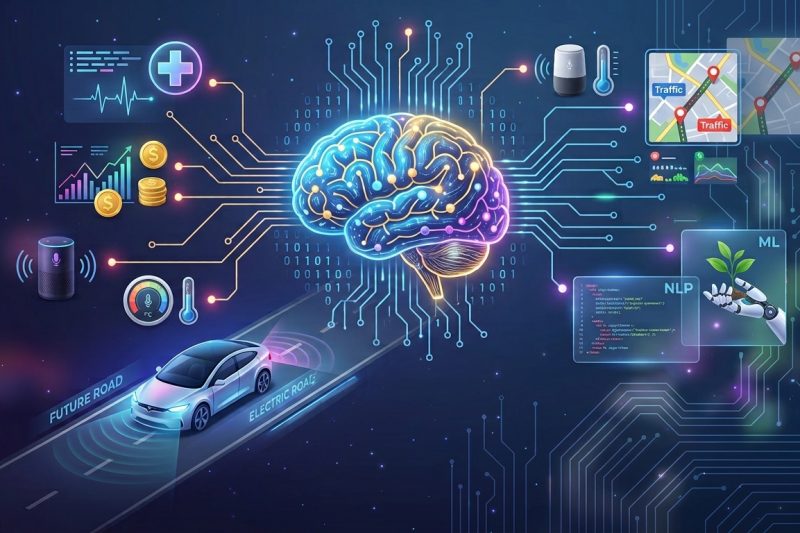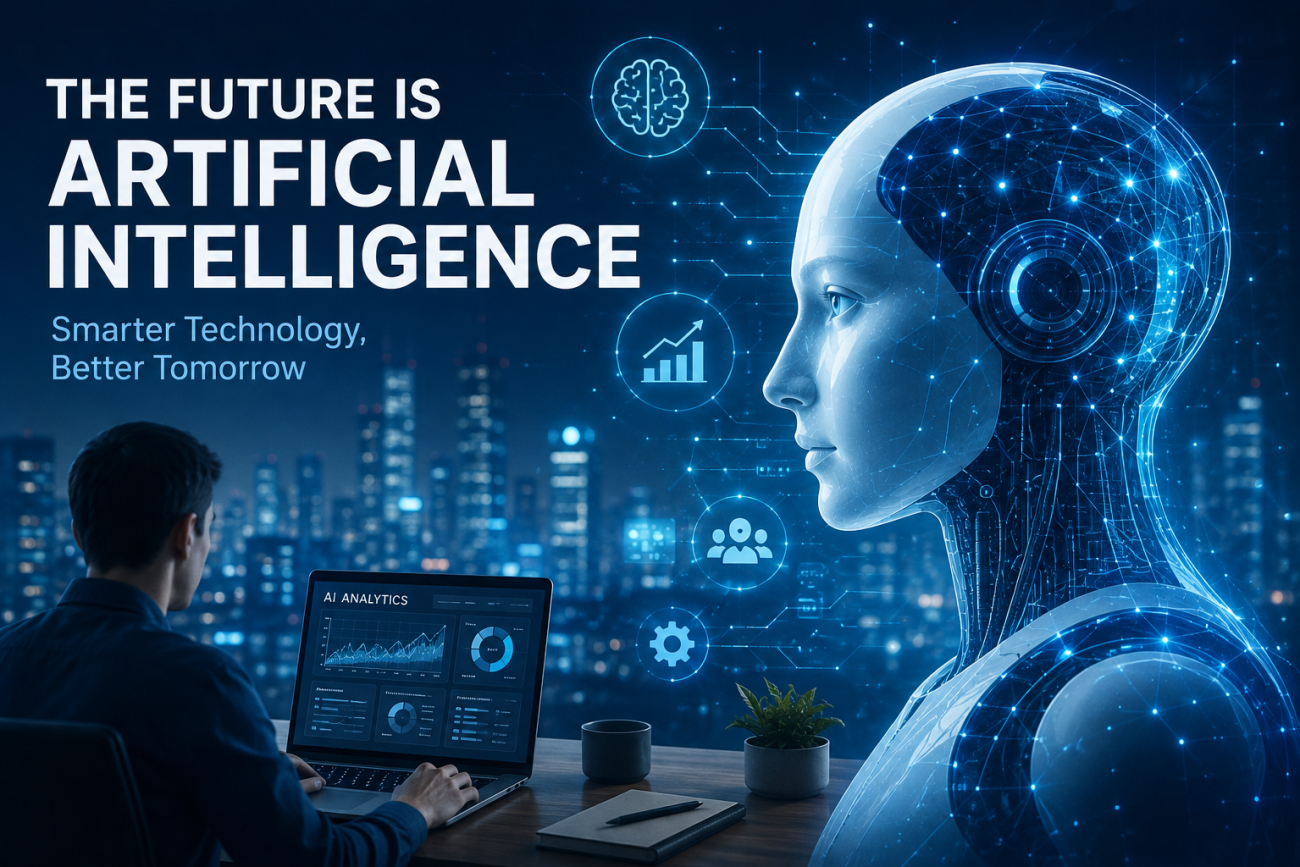
Artificial intelligence, usually called AI, has quickly become one of the most important technologies in the modern world. A few years ago, AI sounded like something from a science-fiction movie. Today, it is part of everyday life. From search engines and smartphones to online shopping, education, healthcare, and business, artificial intelligence is changing how people solve problems and make decisions.
But what exactly is AI, and why has it become so important?
What Is Artificial Intelligence?
Artificial intelligence is a technology that allows computers and software to perform tasks that normally require human intelligence. These tasks can include understanding language, recognizing images, learning from information, solving problems, and making predictions.
Modern AI systems can process huge amounts of data much faster than humans. Instead of following only simple instructions, many AI models can learn patterns from existing information and use those patterns to produce useful results.
One of the biggest developments in recent years has been generative AI. Tools based on generative AI can create text, images, audio, videos, computer code, and other types of content. This has made AI accessible to millions of people, not just technology companies and researchers.
How Does AI Work?
Although artificial intelligence can seem complicated, the basic idea is easier to understand.
AI systems are trained using large amounts of data. During training, the system looks for patterns and relationships within that information. A machine learning model, for example, can analyze thousands or millions of examples and gradually improve its ability to recognize similar patterns.
Deep learning is a more advanced approach that uses artificial neural networks. These networks are inspired, in a simplified way, by how the human brain processes information. They are especially useful for tasks such as image recognition, speech processing, translation, and natural language understanding.
When you ask an AI chatbot a question, the system analyzes your input and generates a response based on patterns it learned during training. The result can look surprisingly human, even though the technology works very differently from the human brain.
AI in Everyday Life
Many people use artificial intelligence without realizing it.
When a streaming platform recommends a movie, AI may be analyzing your previous viewing behavior. When an online store suggests products, machine learning algorithms may be predicting what you are likely to buy. Smartphone assistants can recognize speech and understand commands using AI technologies.
Navigation applications also use artificial intelligence to estimate traffic conditions and suggest routes. Email services can automatically identify spam, while social media platforms use algorithms to recommend content.
In other words, AI is no longer limited to laboratories. It has become part of the digital services people use every day.
AI and Business
Artificial intelligence is also changing the business world.
Companies use AI for customer support, data analysis, marketing, fraud detection, automation, and forecasting. Chatbots can answer common customer questions, while AI-powered analytics can help businesses identify trends in their markets.
Small businesses can benefit from AI as well. A business owner can use AI tools to create marketing ideas, organize information, write product descriptions, analyze customer feedback, or automate repetitive tasks.
The main advantage is not simply that AI can replace manual work. In many cases, it allows people to spend more time on creative thinking, communication, strategy, and decision-making.
AI in Education
Education is another area where artificial intelligence has significant potential.
AI tools can help students understand difficult subjects, practice languages, generate study questions, and receive explanations adapted to their level. Teachers can also use AI to organize materials, create exercises, and analyze learning patterns.
However, AI should be used as a learning assistant rather than a replacement for actual learning. Students still need to develop critical thinking, problem-solving skills, and the ability to check whether information is correct.
This is particularly important because AI systems can sometimes produce incorrect or misleading answers.
The Benefits of Artificial Intelligence
There are many potential advantages of AI.
First, AI can save time by automating repetitive tasks. Second, it can process large amounts of information quickly. Third, AI can help people discover patterns that might be difficult to identify manually.
Artificial intelligence can also improve accessibility. Speech recognition, automatic translation, image descriptions, and other AI-powered technologies can make digital services easier to use for people with different needs.
For researchers and professionals, AI can also become a powerful tool for analyzing complex information and exploring new ideas.
The Challenges of AI
Despite its advantages, artificial intelligence also creates important challenges.
One major concern is misinformation. AI can generate convincing text, images, and other content, making it increasingly important to verify information before believing or sharing it.
Privacy is another important issue. AI systems often depend on large amounts of data, which raises questions about how personal information is collected, stored, and used.
There are also concerns about employment. Automation may change some jobs and reduce the need for certain repetitive tasks. At the same time, AI is creating new types of jobs related to software development, data analysis, AI management, cybersecurity, and other fields.
The future of work will probably involve humans and AI working together rather than simply one replacing the other.
What Is the Future of AI?
The future of artificial intelligence is difficult to predict, but one thing is clear: AI technology will continue to develop.
AI systems are becoming more capable of understanding text, images, speech, and video. Businesses are investing heavily in AI, while researchers are working on making these systems more reliable, efficient, and useful.
For individuals, learning how to use AI responsibly may become an important digital skill. People who understand both the advantages and limitations of artificial intelligence will be better prepared for a technology-driven future.
Final Thoughts
Artificial intelligence is changing the world faster than many people expected. It is already influencing how we work, learn, communicate, shop, and access information.
However, AI is a tool, not magic. Its usefulness depends on how people choose to use it. Understanding its capabilities, checking its results, and using it responsibly are becoming increasingly important.
The future of AI will not be defined only by machines. It will also depend on the decisions people, companies, educators, and governments make about how this technology should be developed and used.